

• Who else wants to learn how to solo with the “altered scale?”

    In this past lesson, we covered the melodic minor scale. And in this past lesson, we covered the modes of the major scale.

    In today’s lesson, we’ll actually combine the two concepts…
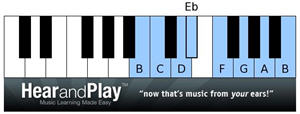
    bsuperlocrian.jpg

    Read the full article →

    Here’s an exercise that’ll get you to remember “couples” tonight

    In yesterday’s lesson, I talked about couples.

    The premise was basically to look at chord progressions as small little “couples.” (When I say “couple,” I’m specifically talking about a pair of chords… just two.)…

    Read the full article →

    Here’s the fingering for all 12 major scales…

    This lesson comes from pages 35 and 36 of the second version of my home study course (it isn’t out yet but I’ve been writing it for like 2.5 years now). Check it out…

    Read the full article →

    Using the power of tetrachords to play any major scale you want!

    On Friday, I taught you how to look at chords according to the number of notes they have.

    This introduced us to names like “tetrads,” “pentads,” “hexads,” “heptads,” and of course, the “triad.” These are names for collection of notes played at the same time (i.e. – “chords”).

    Today, I want to talk about the other side of things — the names of collection of notes played one after the other (i.e. – “scales”). And specifically, I want to focus on the tetrachord.

    Read the full article →

    Anyone else want to learn another easy way to classify chords?

    Most people just classify chords by name and chord quality (major vs minor, augmented vs diminished). But today, I want to show you another world. Here’s how to think of chords by the number of notes they contain. This will be short and to the point.

    Read the full article →

    Are you naming your scales correctly?

    For the past couple of days, I’ve been stuck on teaching you how to name chords correctly.

    Today, I want to shift the focus to scales because I’ve seen many people incorrectly write their major scales. For example, here’s are some common mistakes…

    Read the full article →

    Here’s a foolproof guide that’ll have you naming chords correctly… TONIGHT!

    checklistsmall.jpgYesterday’s lesson was one of my longest yet. And it was worth it! I took you through a foolproof method for naming chords correctly. And many of you were helped tremendously (per your comments and radio show feedback last night).

    Today, I want to make it even plainer…

    Read the full article →