In this month’s online classroom, I’m going to share with you a few video clip lessons from the GospelKeysTM 202 video course. I’ve selectively pulled out clips that I think you’ll benefit from, whether you consider the entire course or not.
Before I introduce the video clips, it is important that you understand the whole concept of learning worships songs (or any song for that matter) by ear:
It all starts with major scales.
You should already know that there are 12 different major scales. When someone is singing, they’ve either knowingly picked ONE of the twelve keys to sing in (which might be their favorite key or a predetermined key for the song they’re singing) OR they have just started singing in whatever range that is comfortable for them. In this instance, they don’t really know their major key and it is your job to figure out what key they’re singing in.
A singer can’t be in two keys at once. At any given time, you will only be in one major key. Songs may modulate or go to another major key, but will only be in one major key at a time.
We focus on Db major in the GospelKeysTM 202 video course.
I start the course by teaching you several different chords that you can play on each tone of the major scale. Just to break down the concept for you, here is a Db major scale:
Db major scale
Db __ Eb __ F __ Gb __ Ab __ Bb __ C __ Db __
In other words, I teach you several chords to play on each one of these tones. Since every major key on the piano has its own major scale, these same chords can be applied to all 12 major keys! Always transfer what you learn from ONE key to all TWELVE keys. This is a very very smart and effective habit to develop, especially if you’re just starting out!
Also, it is important to understand each note of a major scale by its corresponding number. In other words:
Db = 1
Eb = 2
F = 3
Gb = 4
Ab = 5
Bb = 6
C = 7
Db = 8 (or the same as 1 basically)
Majority of the time, a song is progressing from one of these tones to another. I’d say more than 80% of the time, you’re playing chords that correspond with notes of the major scale.
Yes, there are times when, in the key of Db, you’ll hit a B major chord. Notice that “B” is not a part of the Db major scale. In this instance, “B” is actually the flat 7 note of the scale. “How do you create a flat 7,” you may ask?
Simply go to the 7th note of the scale (which is “C” in this example) and lower it one-half step (or one note). Remember, only lower it one note. Don’t skip any notes, whatsoever. I say that because some people don’t realize that black keys are a part of the piano just as well as white keys. In other words, when you lower a note, don’t skip any black notes.
In this case, since C doesn’t have a black key behind it, you’d lower it directly to B.
B is the flat seventh of Db major. This is just one example where you’d play a note or chord that may not necessarily align with the notes of your major scale. This will happen but not nearly as much as regular progressions within the notes of the major scale.
Most of the time, you’ll be playing from a 1 chord to a 3 chord, or a 1 chord to a 5 chord, or a 3 chord to a 6 chord, or a 6 chord to a 2 chord, just to give a few examples. Most songs stay with the number patterns.
Now that you understand the number system, I can talk in GospelKeysTM language.
Patterns like “1-3″, “3-6″, “6-2″, “2-5-1″, and others all come from major scales.
Db = 1
Eb = 2
F = 3
Gb = 4
Ab = 5
Bb = 6
C = 7
Db = 8
Just to make sure you understand, let’s take a short quiz:
1) In the key of Db major, a 1-3 progression consists of what two keynotes?
____ (1) **** ____ (3)
2) In the key of Db major, a 2-5 progression consists of what two keynotes?
____ (2) **** ____ (5)
3) In the key of Db major, a 7-3-6 progression consists of what three keynotes?
____ (7) **** ____ (3) **** ____ (6)
4) In the key of Db major, a 1-4 progression consists of what two keynotes?
____ (1) **** ____ (4)
Ok, now grade yourself:
Answers:
1) Db to F
2) Eb to Ab
3) C to F to Bb
4) Db to Gb
Note: Of course, all of these notes will be connected with chords. But for this example, I just wanted you to know the keynotes involved (the title of the chords).
Ok, so now that you have a crash course on what I call “couples” (just another way of saying very small chord progression), we can move on to the video clips.
Click to watch this video clip
|
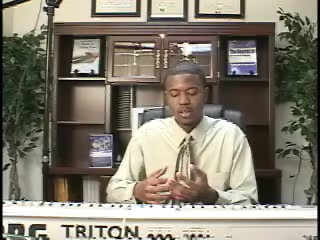
Video Lesson #1 This clip teaches a type of voicing that few musicians have ever heard of. It’s called the “Quartal” chord. It creates a very contemporary sound. Do yourself a favor and learn this chord in all twelve keys! Duration: 1:17 |
Click to watch this video clip
|
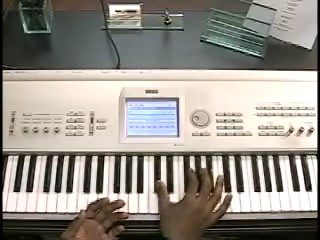
Video Lesson #2 This clip teaches you multiple “2″ chords to play. Remember, a “2″ chord commonly begins what we call a “2-5-1″ chord progression. If you understand anything about these progressions, you know that they commonly end songs. In other words, even an audience knows when to start applauding when a 2-5-1 approaches. Duration: 1:34 |

|
Video Lesson #3 A continuation of clip #2, you’ll learn some more fancy “2″ chords that are sure to spice up your playing. There is one chord I teach in this clip that you don’t want to pass up! It utilizes all five fingers and I warn you — you have to stretch for this one! Duration: 1:15 |

|
Video Lesson #4 This altered chord is probably one of the most commonly played chords in gospel music. From personal experience, I use it in probably 70% of songs I play. Now, keep in mind that I’m referencing the type of chord (7 #9#5) — remember that this chord can be played in 12 different keys! No matter what song you’re playing, it will show up sooner or later! Duration: 1:13 |
Click here for all 10 video lessons (over 20 minutes in content)!
Well… obviously I couldn’t fit all 20 minutes worth of video clips in this e-mail. But please do yourself a favor and visit https://www.hearandplay.com/gk202clips.html to see all 10 of them and more!
You’ll find clips ranging from chords to chord progressions, from left-hand bass techniques to right hand “licks”, from simple “grooves” to full songs with vocalists, drums, and live accompaniment. It’s worth taking a look at: https://www.hearandplay.com/gk202clips.html
Explore these chord types along with the GospelKeys 202 video course:
- Major triads; see pg chapter 5 of 300pg course
- Minor triads; see pg chapter 8 of 300pg course
- Major sixth chords; see pg chapter 13 of 300pg course
- Minor sixth chords; see pg chapter 13 of 300pg course
- Seventh (dominant) chords; see pg chapter 10 of 300pg course
- Minor seventh chords; see pg chapter 10 of 300pg course
- Major ninth chords; see pg chapter 14 of 300pg course
Well, I hope you enjoyed this month’s newsletter and I’ll be back! Take care!